
Going Down Slow
Dream of Death – 3
Now they’ve all left, gone to see the hospice. He’d wanted them gone, for a few hours anyway. He wants to summon a nurse to help him with the bedpan—embarrassing enough—but also painful with his lower body so congested with fluids.
And he wants to prepare himself. He knows that in the hospice, they’ll give him morphine and he craves the relief from pain. But he also knows, and accepts, that the morphine will kill him.
Death! Once again, he feels fear, that leering companion, muscling up from under his stoic front. But why? He has no fear of what happens next. He’s never thought there was an afterlife. The brain goes, you’re dead, then just nothing, with a capital N. So what the hell is he so afraid of?
It’s not about Margie. He’d made sure there was enough money coming in to keep her comfortable and cover most emergencies. And he knows the kids are going to catch on pretty damn quick (if they didn’t see it already) as to how her mind was starting to go, and had been for a year or two. They would have to shield her now and take care of her more and more. But he trusts the kids to do that. Honor your parents. They would.
The fear subsides a bit, but his heart still thumps, too fast, irregular, in his chest. I’m not ready to die. But what more was he supposed to do that he hadn’t done? He’d never been that ambitious. There wasn’t a project or passion left abandoned. He clamps his teeth against the anxiety churning in his stomach. Come on, I did my best.
He remembers the toting-up he’d done a couple of months ago. He had been astonished by the simplicity, actually, the triteness, of the truth about his life. He’d seen that it didn’t really matter exactly how his life had played out. It didn’t even matter which job, or which wife, or how much success. What mattered to him now, at the end, was how he had conducted himself. Had he been kind? Met his responsibilities? Shown loyalty? Kept close to the truth? Improved what he found when he could? These were the questions he asked himself. And he did okay. Maybe he could have done better, but he did okay.
With these thoughts, he suddenly realizes that he can’t just will his fear away. It’s too primitive—a biological protest against the certainty of coming death. He senses that this fear is like his physical pain: Pain, with its clamoring voices rebelling against dying. My body is not ready to die.
He reaches the bed control and motors up to a sitting position. That takes some of the sharp ache out of his back. His internal organs are all slowly failing, but it’s the kidneys that are bothering him the most. Bending into the sitting position aggravates the bed sores. They’re like burning burrows in his hips, but if he doesn’t move around, they don’t hurt so much. The worst pain is in his swollen legs and feet. It’s a constant throbbing, scratching pain.. They’ve made a small tent with a hospital sheet to protect his feet, and he’s glad of that because any feathery touch on the stretched skin sears, and a bump is agony.
Now, time to try the bedpan. But as he pushes the button taped to his bed-side railing to summon the nurse, a shiver convulses him, rattling his teeth. He knows the room thermostat is set at eighty because he insisted on it. But his heart’s hot blood, pumped so slowly out to the perimeter of his body, is cool under his skin. Another shudder shakes his frame, trying to force movement and warmth into his muscles. He knows it’s his body’s effort to hold the line against the ersatz cold. He tries to pull up the thin hospital blanket, but it’s soft and cold to the touch like snow, and white, like snow, and spread out before him like
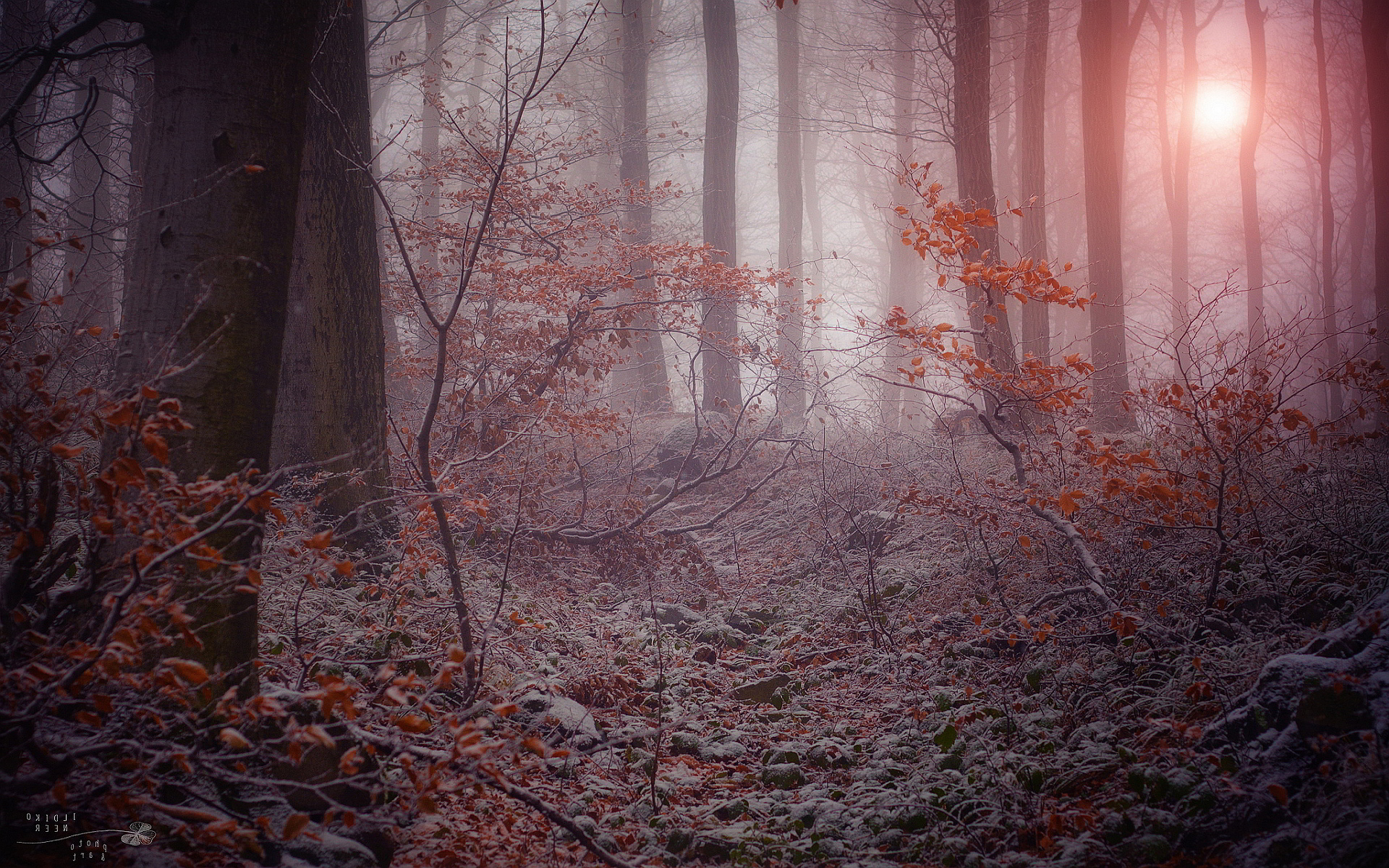
four inches of fresh powder undulating over the ground, following the hidden bulk of logs and weeds and rocks. He’s sitting in the woods, at the edge of a small clearing, surrounded by white pine, spruce, and maple. The fingers of the trees hold bridges of snow. He’s propped against a pine, legs stretched out before him. He can tell it’s Michigan near the hunting camp, his boyhood home. It feels like December, maybe ten-fifteen degrees.
Above the clearing, the sky is a dusky pearl gray, an infinity of twilight that has always seemed like a promise to him, a forever that waits. A few feathery snow crystals drift in hypnotic eddies to the ground, slow enough and spaced enough for him to track each spinning path. As he watches, he can hear the clicks and moans of ice in the branches, and the susurrant cascades of snow marking the passage of hidden little lives.
His head and hands are bare, but he’s not surprised. He knows the body, in a desperate effort to thwart a freezing death will rev its metabolic engine into a last furnace flash of heat. People throw off their mittens, hats, even boots, at this stage. That’s the irony in freezing to death. But at the very end, there’s no pain, no feeling at all, just a sublime numbness. It’s a good way to die.
A low, sonorous “Hooo,” emanates from the treetops. He cranes his neck and finally spots her up and to the left, white and brown in the dark branches of a spruce. The Great Horned Owl twists her head to focus golden eyes on his body. “Hooo,” she announces, pupils dialing open to liquid black in a pale, feathered mask. “Soon, ” he agrees, and is ready . . .
“Mister Friedrich?” A human voice, like a soft cloth, wipes the dream into gray blankness—and the pain of life explodes through his body in a blood-red wash. He gasps, eyes slapping open, and clutches the bed rails. The nurse he’d summoned earlier has arrived.