

About Me
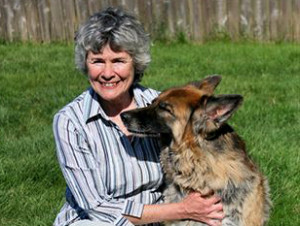
I’m a psychologist, now retired from a career including clinical practice, research, and college teaching.
I started writing fiction somewhat late in life. What began as an impulse to record a few family events morphed into a surprising desire to write. I’d never even kept a journal, but found myself captivated by the challenge of describing what I imagined and experienced—finding the right word, a fresh phrase, an accurate sequencing.
My first novel, “A Second Chance Life,” has been recently published and is available at http://www.thirdplacebooks.com
“Speculative fiction” is the closest genre label for much, but not all, of what I write. Here are some questions I consider in my stories.
- Is it true that the only way we can directly know the world is through our five senses? Or is there something to be said for intuition and clairvoyance?
- Is it true that time flows only one way, and we can’t see into the future?
- Is it true that we can’t know what goes on after death?
You could think of these boundaries (sensory limits, the nature of time, death) as walls which cage us inside our known reality. But do these walls exist? I don’t know the answer, but as a researcher, I’m invested in the scientific method as a way of exploring these questions.
Hundreds of scientific studies have investigated the limits of known reality, with mixed results. But the search goes on because credible people continue to report experiences from beyond the walls. Maybe you remember your own spine-tingling hunch, premonition dream, astounding luck at cards, or the cold breath on the back of your neck?
Another area of life-long interest and a common theme in my stories is how we cope with “that which we cannot bear.” As a clinical psychologist, I witnessed people struggling with fear, guilt, depression and rage. Of course we all have our own way of living with these emotions and the events that elicit them. Sometimes our coping is effective, sometimes not. But what if the emotion is so intense and insistent it pushes a person right through the walls of reality? Would we call that madness, or something else entirely?
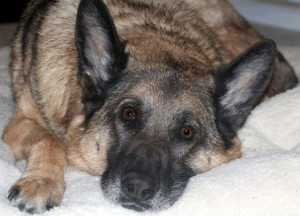
And finally, I’m a big fan of German Shepherd Dogs. Many of these intelligent, loyal animals have graced my life. In my writing, the human-canine bond is used to show some of the worst in ourselves (neglect, cruelty) and some of the best (devotion, self-sacrifice). I also consider how our connection to animals might mirror our relationships with our own kind.
I have used dog characters to address yet another aspect of the walls of known reality, which is the idea that you can’t directly know another being’s experience. No amount of empathy will reveal to you what the world actually looks, sounds, smells, and feels like to another person, let alone a dog. But suppose your faithful companion dog (or cat) has a telepathic inclination?
Join me on this tour of science, psi and psychology. I welcome your thoughtful responses to my blog, stories, and to the novel when it appears in full.
Teresa Hayden
Ph.D. in Psychology: Stanford University
Courses Taught: Clinical Psychology, Human Emotions, Personality, at the University of Wisconsin-Madison
Clinical Practice: Madison, Wisconsin