
The Feel of Real

In the late 1970’s, I was a psychology trainee on a psychiatric unit of a hospital in Madison, Wisconsin. And I was scared. Patients talked nonsense, tried suicide, and shuffled aimlessly through the corridors looking downright miserable. They were medicated into submission and sometimes locked into restraints. I had no clue as to how to help them.
But I was lucky to have Myron, one of the Aides, who took me under his wing. Myron was not afraid. He explained the therapies, the staff politics, and the stories of some of the patients. More importantly, he had a depth of empathy and understanding that comforted the patients as well as myself. We became friends.
Over the years, Myron turned to shamanic practices as a means to heal people in emotional turmoil (http://myroneshowsky.com). As a psychotherapist, I was interested in Myron’s shamanic work, but remained somewhat skeptical about its usefulness until I realized I was an ignorant skeptic. In the mid 1990’s, I signed up for one of his beginner’s Shamanic Practices workshops.
The workshop was great fun. No drugs, but lots of relentless drumming to evoke a proper state of mind (www.stanford.edu/group/brainwaves/2006/MaxfieldABSTRACT.pdf). We lay on the floor, closed our eyes and imagined traveling to a magical lower world, looking for our power animal. I loved the idea of having a power animal, a buddy at my side. Then we paired up and tried some healing. For example, my partner’s power animal, an eagle, used its beak to break up the fasciitis knots in my heel. In another lesson, we studied the surface of an ordinary rock and imagined story scenes in its mottled crevices.
Throughout the two days of the workshop, I was acutely aware of using my imagination at all times: to find a power animal, to “see” the events of a journey, or to experience the spirit guides of the upper world. I never for a minute lost the sense of agency, or forgot that I was creating the experience. And because of that, the workshop did not feel like a novel experience. Instead, I saw the shamanistic techniques as an interesting way to tap into my own unconscious and intuitive sources of knowledge, not as entering a profoundly different realm.
Fast forward fifteen years. I was writing a scene in my novel (“A Second Chance Life”) in which Sara, a skeptical psychotherapist, asks her friend Jude to lead her in a shamanic Journey. He agrees, and the Journey she undertakes was easy to write. I used my own experience from Myron’s workshop.
But there was another Journey I included in the book, one that was not so easy to write. This Journey is undertaken by the Indian shaman Tsitsuga’ in order to help Jude, his young apprentice, accept his gift of “seeing.” I’d tried many times to imagine Tsitsuga’’s Journey and kept drawing a blank. So I decided to simply mention it and move on with the plot.
But my writer’s group would have none of that. They challenged me. “C’mon, give us the details. What’s a real shaman’s journey like?”
“How the hell should I know?” I wanted to yell at them. “I’m not a shaman.” But I was embarrassed by my failure of imagination. Why couldn’t I just come up with something?
Then it hit me. Unlike my own imagined journey in the shamanic practices workshop, Tsutsiga’’s Journey feels real to him. He believes that the spirit world exists independently of his imagination. Nonordinary reality, just like ordinary reality, exists apart from the traveler and can push against him with its own inexplicable whims and purposes. That’s why it feels real. Only in the imagined world does a person have complete agency.
And maybe because of the sense of agency, emotions in an imagined world have a once-removed quality. They are subtly altered by the knowledge that events are “being made up.” But in the reality of the spirit world, Tsitsuga’ has emotions with immediacy. They feel real, just like in ordinary reality.
I knew that Tsitsuga’ would enter the spirit world as himself, a man with desires, values and emotions. He would bring his powers, his allies, and a question he hopes to answer. He would confront a world different from ordinary reality, but real, nevertheless.
I was ready to imagine his Journey.
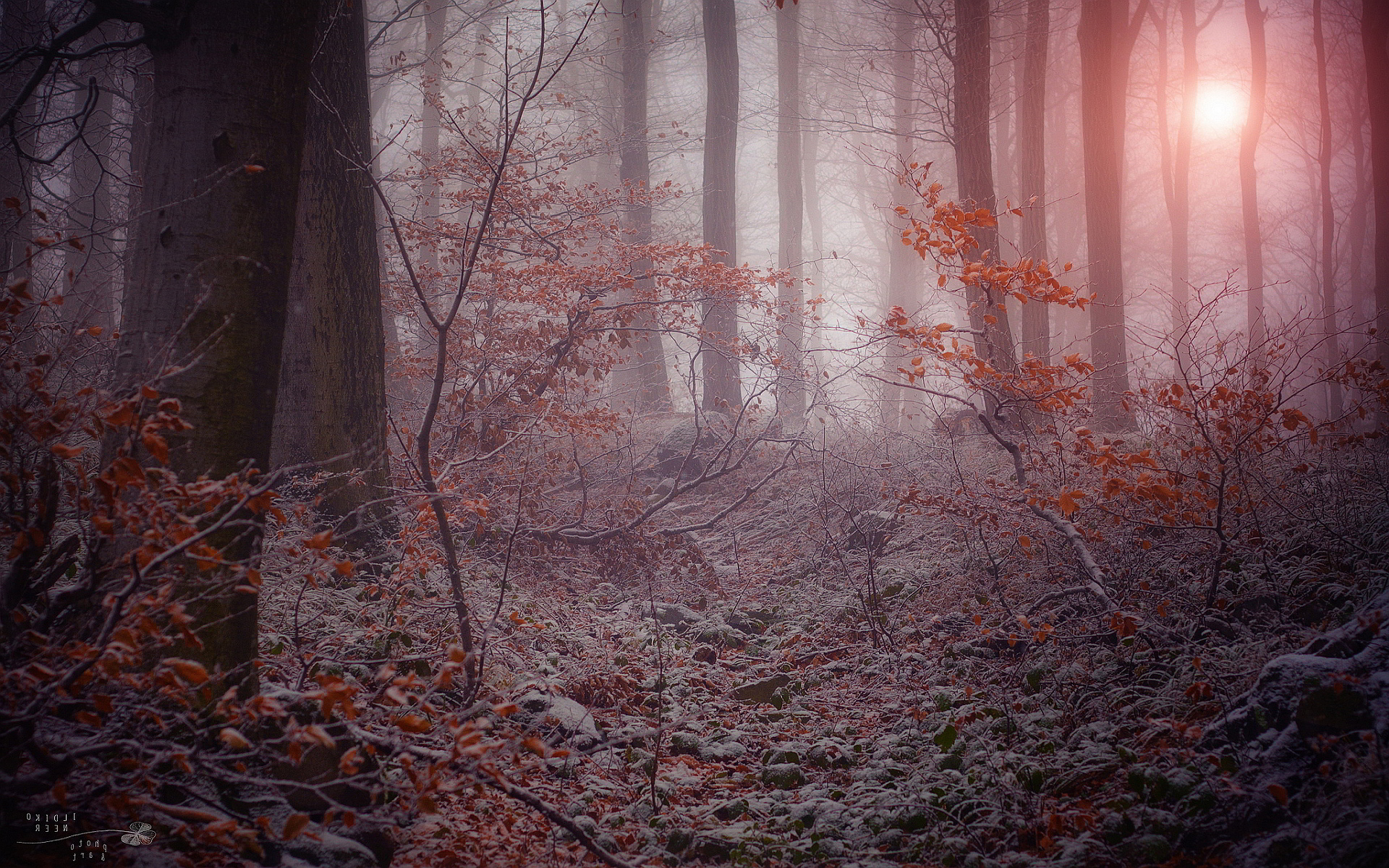
Eagle photo provided by tpk-photography.com


What is real to people in one cultural group may seem absurd to members of another. I like how this book deals with differing reaities and the transfer of knowledge across cultural boundaries. Thanks for posting your sources; it deepens my experience of the novel.
Love the “woof” image. As anyone who loves dogs knows, they are an object lesson in differing perspectives. Their sense of time, place, emotion can be more intense and accurate because they receive more sensory data than we do. Leads to mutual bafflement sometimes.
Thanks for the background on your shamanic workshops – your writing is very clear and natural.