
Spirit Allies
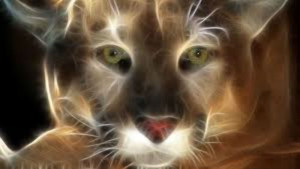
In my novel “A Second Chance Life,” Sam, an Indian healer, has a dream involving his spirit ally (or guardian spirit):
“That night, Cougar, Sam’s guardian spirit for the last several years, padded into his dreams, into the cabin. Sam lay on his side in the bunk, arms folded under his head, and watched the cat, belly brushing the floor, slink silently to the cot where Jude lay sprawled, a leg dangling over the side. The beast whuffed a bare toe, then glided to snuffle at Jude’s face, her whiskers twitching forward, the big cat’s way of breathing in the essence of a man.
Cougar stepped onto the cot, bracing her muscled body on front legs. She nosed Jude’s shirt and with claws sheathed, pawed off the tangled blankets. She studied the sleeping man-form, then dropped to the floor. Cougar fixed yellow eyes on Sam, blinked, then sat. A growling purr rattled in her chest.
The next morning, Sam woke with the dream bright in his mind. He knew Cougar was telling him that Jude was worth her attention, and so, was not an ordinary man. Even more, by sitting next to Jude and not harming him in any way, she was offering protection, maybe, or an alliance. It seemed as if Cougar was telling him that he and Jude would be connected somehow.”
Shamans in many cultures have what anthropologists often call “power animals” (guardian spirits). These entities are associated with non-ordinary reality, and are experienced as real to the shaman. For a brief, excellent discussion of differences in the form, function and possession of power animals in North and South Native-American cultures, see anthropologist Michael Harner’s “The Way of the Shaman” (Harper & Row, 1990). But despite cultural differences, power animals are commonly seen as beneficial, and they allow the shaman to use the particular strengths and knowledge of a species. For example, Crow might fly to a distant place to gather information. Furthermore, a shaman can communicate with his guardian spirit and even morph into the form of that animal.
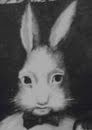 The general idea of a guardian spirit certainly occurs in groups other than Native-American cultures. One example is the pooka, a Celtic spirit said to appear as a horse, goat, or rabbit. The pooka can sometimes be malevolent, but the giant rabbit in Mary Chase’s 1944 Pulitzer Prize play “Harvey” is a benevolent spirit, and can predict events and stop time. I recommend the 1950 movie of the same name starring Jimmy Stewart, a classic adaptation of the play.
My short story, “There When You Need Him,” is a variation on the guardian spirit theme. It’s set in the U.S. Midwest, and follows Emily, a woman who is self-reliant to a fault, as she copes with her fear of death.
(Cougar image from picstopin.com)